
Media Corner
JMERC Supports Education Data Use and Evidence-Informed Planning in Eswatini
JMERC, through its partnership with UNESCO-IICBA under GPE-KIX Africa 19, supported a two-day EMIS Data Use Workshop in Eswatini.
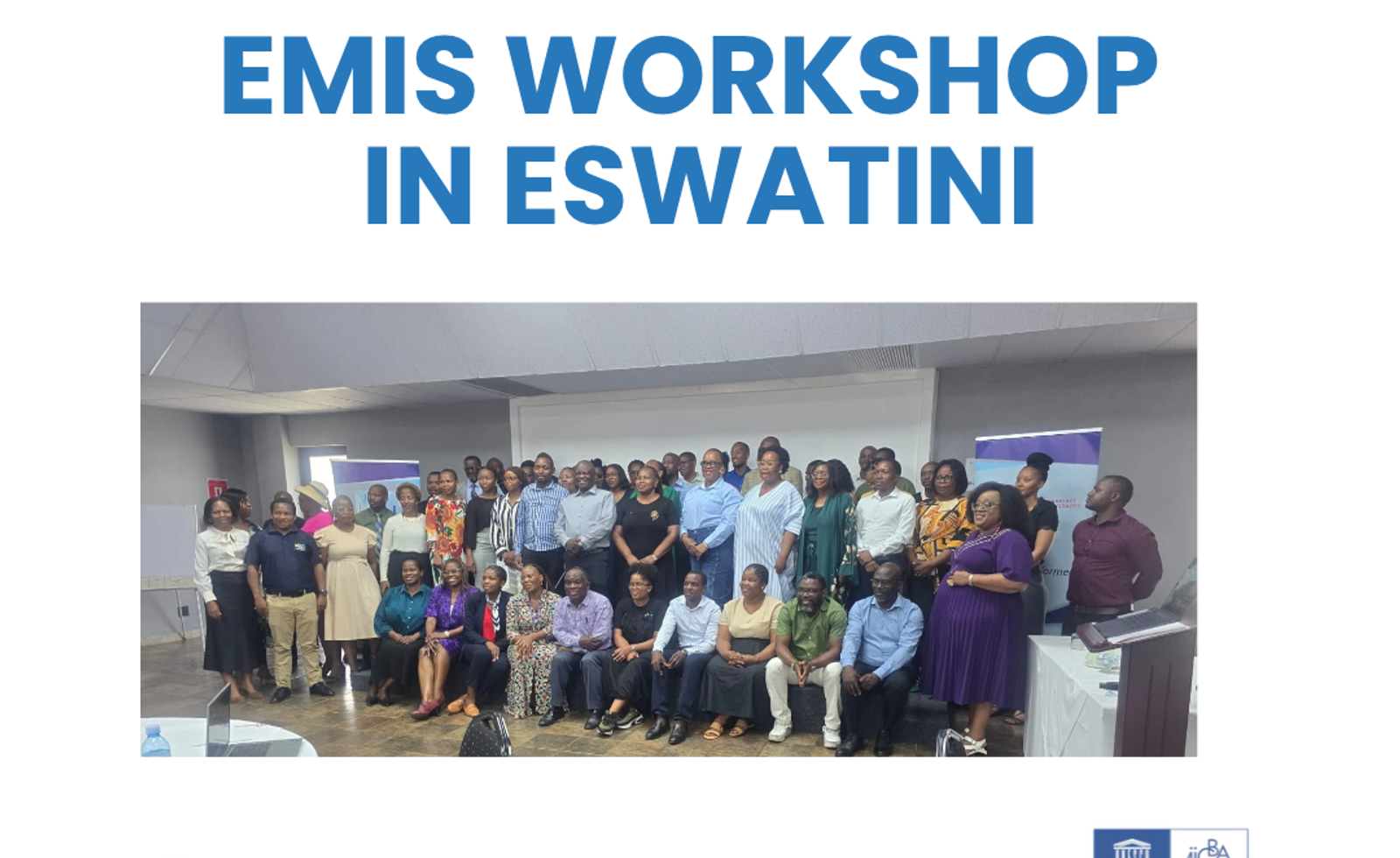
15 -16th October, Mbabane,Kingdom of Eswatini: JM Education and Research Centre (JMERC), through its partnership with UNESCO’s International Institute for Capacity Building in Africa (UNESCO-IICBA) under the Global Partnership for Education – Knowledge and Innovation Exchange (GPE-KIX) Africa 19 initiative, supported efforts to strengthen the use of education data for planning, budgeting and policy decision-making during a two-day Education Management Information System (EMIS) Data Use Workshop in Eswatini.
The workshop brought together education stakeholders to explore how national education data can inform practical decisions, strengthen coordination across government departments and contribute to more equitable education outcomes. The workshop was convened by Eswatini’s Ministry of Education and Training in collaboration with the African Union Commission’s Pan-African Institute for Education for Development (AU-IPED), the GPE-KIX Africa 19 Hub and Life Skills Promoters (LISP).
Turning education data into actionable insights
Opening the workshop, Dr Adoumatar Noubatour, representing AU-IPED, emphasised the importance of moving beyond data collection to ensure that education statistics inform decisions that directly affect learners and education systems.
“The value of our Education Management Information Systems lies not just in collecting data, but in translating that data into actionable insights that help us make better decisions,” he said.
His remarks underscored a central challenge for education systems: ensuring that the information collected through EMIS is effectively used to identify gaps, guide resource allocation, inform policy and strengthen accountability. Reliable education data can help decision-makers better understand disparities in access and learning, assess system performance and identify where interventions and resources are most needed.
Strengthening practical data use across education systems
The two-day workshop combined management dialogue with technical practice and action planning. Discussions focused on identifying priority policy and operational questions that require stronger evidence, examining how data can inform planning and budgeting, and improving collaboration between departments responsible for education, finance, gender and planning.
Participants also explored practical approaches to assessing data quality, interpreting education indicators and recognising limitations that may affect decision-making. Using approved national datasets, technical sessions focused on analysing information relevant to agreed priorities, including gender equity and resource allocation where the available data allowed.
The workshop further emphasised the importance of communicating findings clearly to decision-makers. Through the preparation of tables, charts and concise evidence messages, participants considered how complex education statistics can be translated into information that supports planning, monitoring and policy action.
A key focus was developing a Data Use Action Brief and accompanying data action plan, outlining proposed improvements, responsible offices, timelines, support needs and progress indicators. These outputs are intended to provide a basis for strengthening institutional approaches to education data use and supporting follow-up action.
Advancing evidence-informed education in Africa
The workshop reflects the broader ambition of the GPE-KIX Africa 19 initiative to strengthen education systems through research, knowledge exchange and the practical application of evidence. Collaboration among government institutions, technical specialists and education partners is essential to ensuring that data informs decisions across the education sector.
For JMERC, this work aligns with its mission as a nonprofit research and development organisation that designs, tests and scales integrated, evidence-informed solutions to improve children's learning, adolescent wellbeing and the systems supporting their development.
Strengthening education data systems contributes to this mission by supporting institutions to make better-informed decisions, direct resources towards identified needs and build stronger foundations for equitable and quality learning. When evidence is accessible, understood and applied, it becomes a tool for improving the systems that shape children's educational experiences and opportunities.
The value of education data lies not simply in what systems collect, but in what decision-makers do with it and how those decisions improve learning opportunities for every child.
Through its collaboration with UNESCO-IICBA and partners under GPE-KIX Africa 19, JMERC continues to contribute to efforts to strengthen education systems and promote the use of evidence in policy and practice across the region.